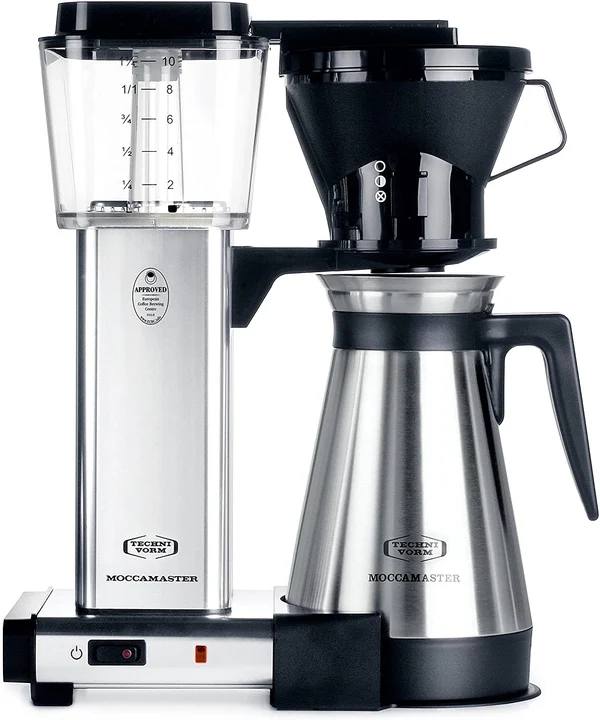
2 tasks for this machine.
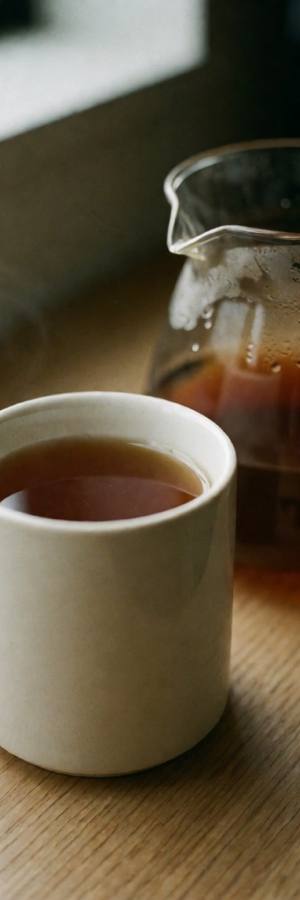
Wash the carafe properly
WeeklyCoffee leaves a brown film on glass and a duller one on steel. It is not a stain, it is oil, and it goes rancid - a thermal jug that has never been properly cleaned adds a stale note to everything poured into it.
What you need
- A long-handled brush. Bicarbonate of soda, an oxygenated cleaner such as Cafiza, or a denture tablet. Hot water.
What goes wrong
- Leaving the pot on the hot plate to dry out, which bakes the film on hard. Cleaning the jug and never the lid. Dishwashing an insulated jug. Taking a scourer to glass and leaving scratches that hold more oil than before.
The procedure
- Rinse with hot water after every pot, before the oil dries. That is 90 percent of the job.
5 more steps
The rest is in the app, with a reminder when it is next due.
Get the appDescale the Moccamaster
Every 3 monthsScale builds on the copper heating element and drops your brew temperature below the 96°C the machine is built around. A scaled Moccamaster brews cooler and flatter, and the element works harder to get there.
What you need
- Citric acid powder, about 30g, or a citric-acid based descaler such as Durgol Swiss Espresso. Fresh water for two rinse cycles. No paper filter.
What goes wrong
- Leaving the paper filter in the basket, which floods the counter. Rinsing only once, so the next pot tastes sour and metallic. Letting the machine sit switched off with descaler in the reservoir overnight, which attacks the element instead of the scale. Using vinegar and then wondering why the coffee smells of vinegar for a fortnight.
The procedure
- Fill the reservoir with 1 litre of water and 30g of citric acid powder, stirred until it dissolves. Warm water dissolves it faster.
4 more steps
The rest is in the app, with a reminder when it is next due.
Get the app